All of us know and love those gorgeous paintings of bouquets, swags, wreaths and goodness knows what else the artists could imagine. You might enjoy learning a little bit of how they came to be made and who excelled in this genre. I am writing a book about the tulip and am taking a crash course in Dutch art history in order to enrich the book with this material.
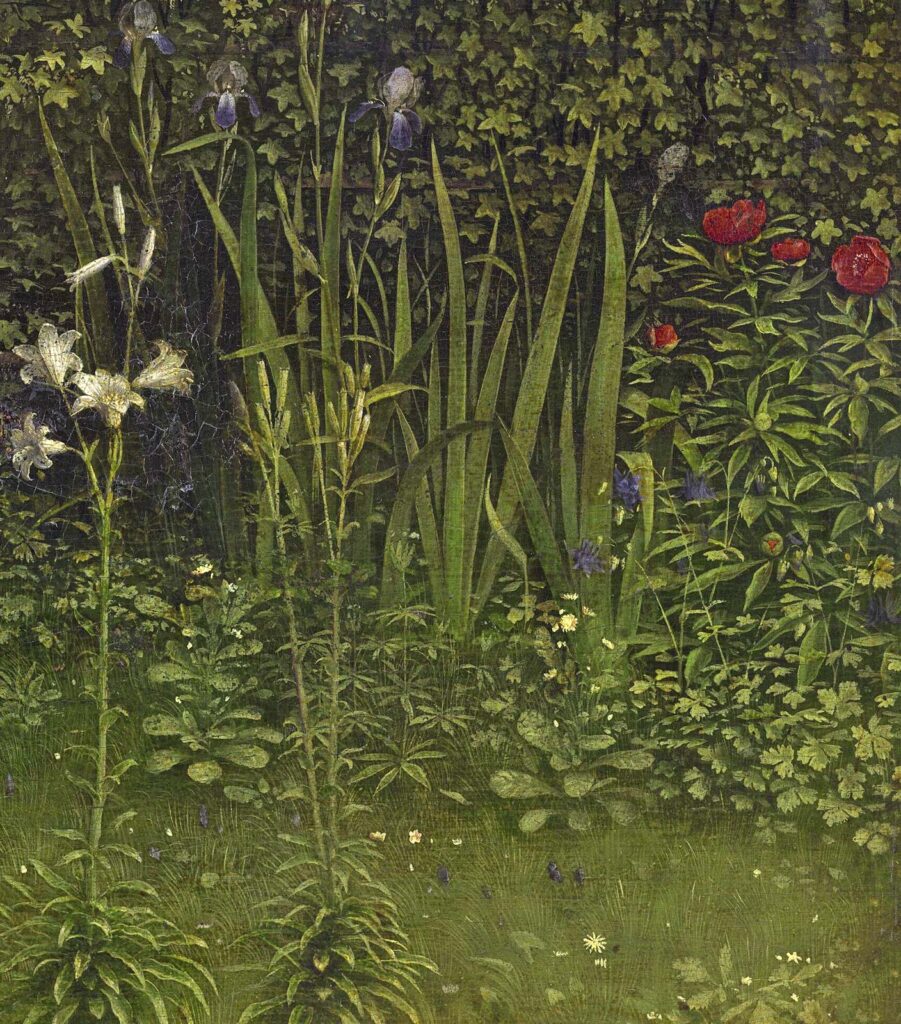
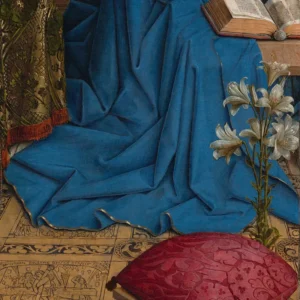
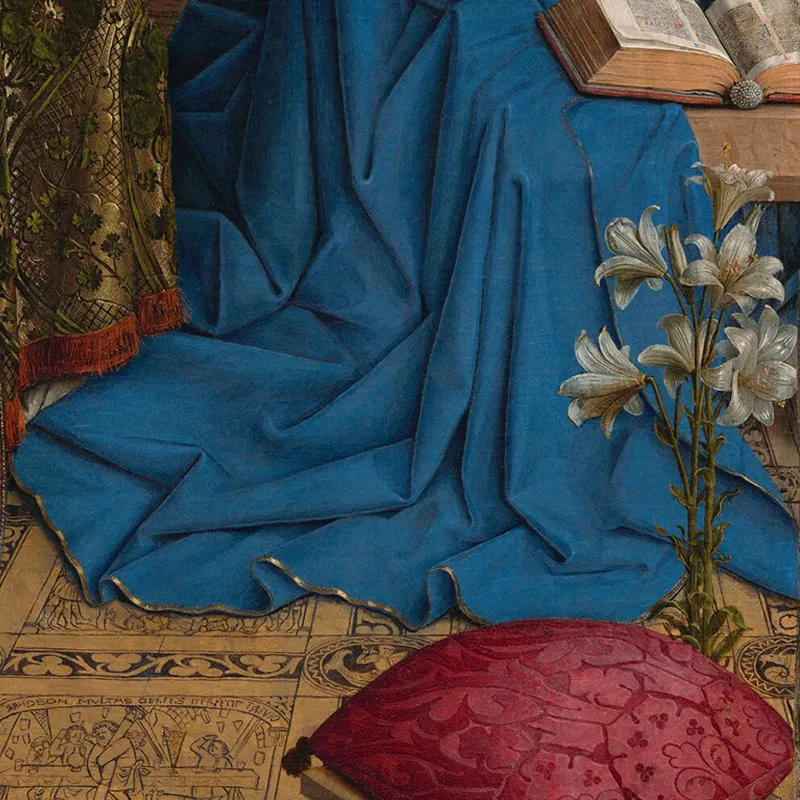
In the fifteenth century Jan Van Eyck, 1390 – 1441, re-vitalized Flemish art, including up to sixty varieties of flower in his complex designs. The first painting of a bouquet of flowers by itself was said to have been done by Hans Memling, 1430 – 1494, a German born artist who lived and worked in the Netherlands a bit later than Van Eyck.
Memling’s picture is of columbines. Religion still had a very strong grip on art and the flowers could be justified as being symbolic of various divine events. The name columbine means dove and the leaves are tri-partite signifying the Trinity. In addition the architecture of the blossom itself had religious overtones.
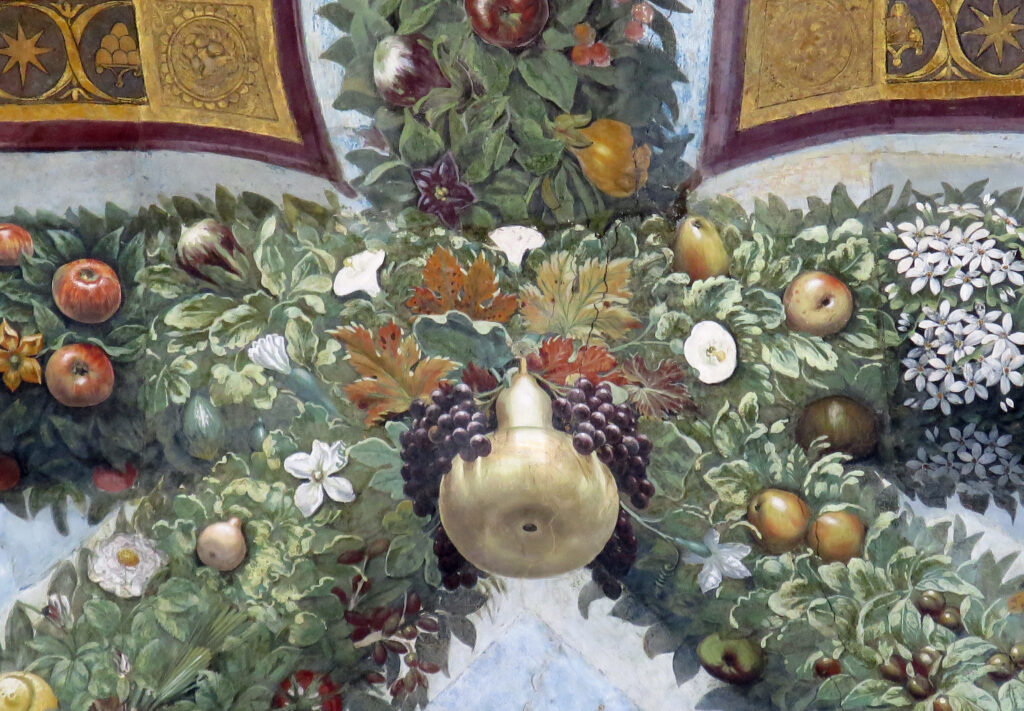
After the auspicious start there were very few independent flower paintings until almost two centuries later. Art historians can point to only a very few actual examples. Giovanni de Udine left one painting done in 1520. Presumably there was little demand. Because we are so accustomed to pictures of this sort we do not
always understand that here was a new way of seeing things, almost unprecedented.
Historians differ in their explanation for its emergence, whether because of the Calvinist domination in the north or a reaching back to classical antiquity.
Depicting flowers in swags and garlands was new and invented by the artists themselves. A bouquet in a vase presented the artists with several difficulties of showing the illusion of three dimensions on a flat two dimensional surface. They had begun to learn how to deal with perspective in distance views but this was close up.
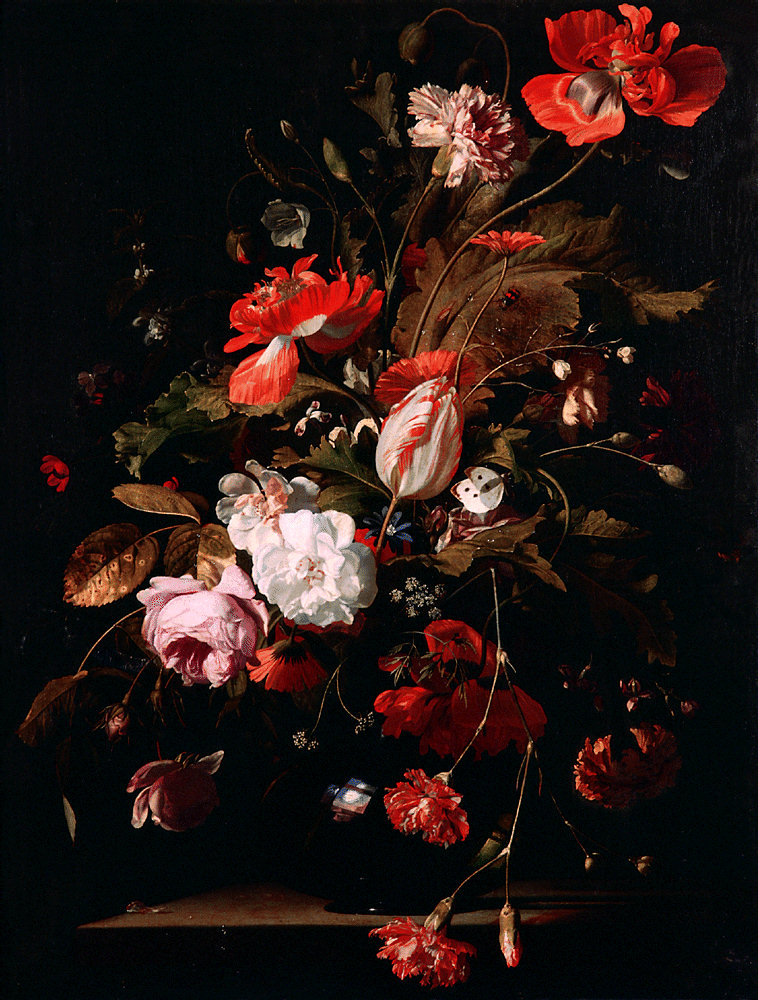
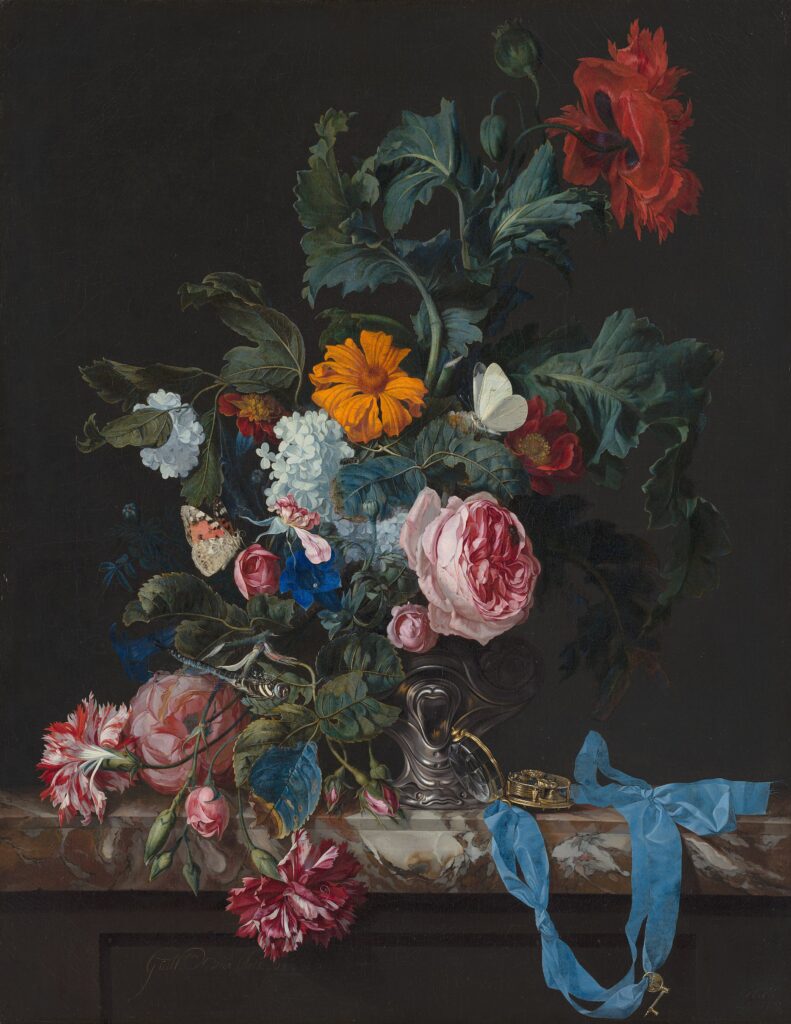
To overcome this they made use of one or two well known optical tricks. The black background helped to bring the painted objects into sharper focus. Warm, lively colors appear closer to the eye than cooler shades. If the natural lighting did not highlight the main object that lighting was modified by creating shadows that should not be there. None of this is immediately obvious to the casual observer. All they see is a charming bunch of flowers when in fact the painting is a largely artificial construct.
The artists who grasped these methods of illusion most successfully sold more pictures and became wealthier than their colleagues. Ambrosius Bosschaert I, (1573 – 1624) J. Davidsz. de Heem, (sic) (1606 – 1684), Willem van Aelst, (1627- 1683) Rachel Ruysch, (1664 – 1750) and Jan van Huysum (1682 – 1749) stand out for their success and even now they tend to be the painters we like best.
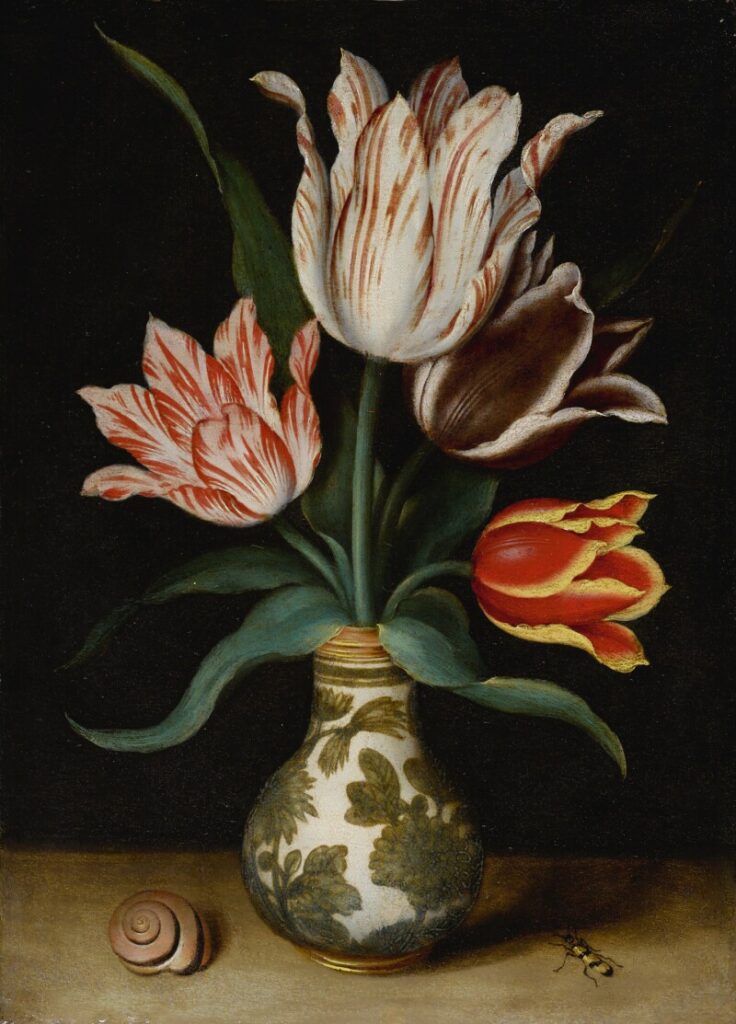
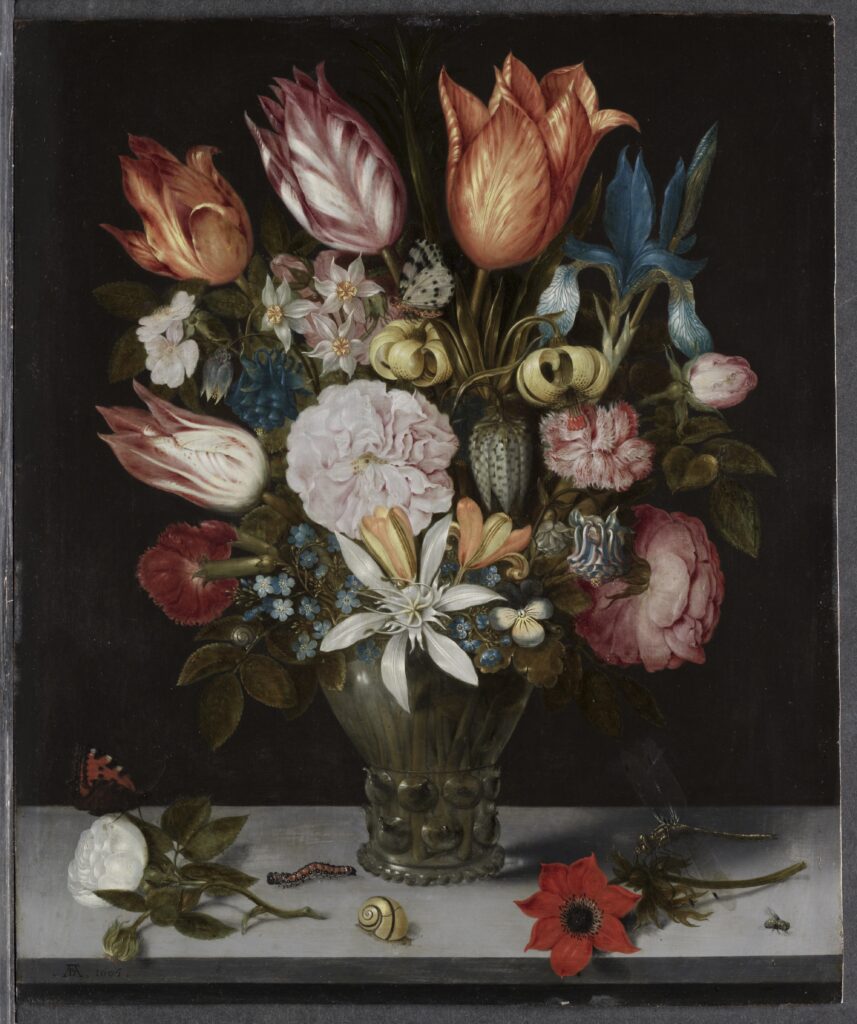
1606 – Ambrosius Bosschaert
Stay tuned for the next installment…